BlueQuest and OZO Phuket host stranded marine animal rescue training
BlueQuest collaborated with OZO Phuket and Amari Phuket to host a workshop on rescuing stranded rare marine animals and using its incident reporting application.
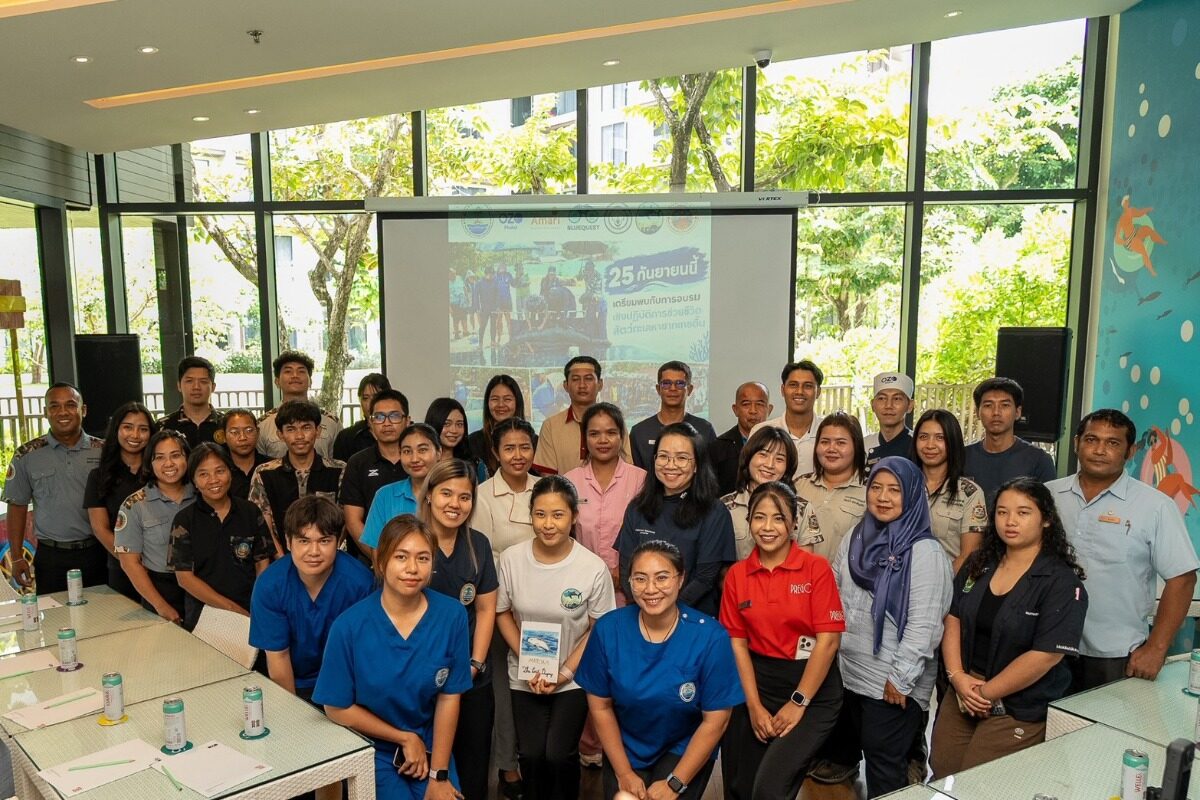
The BlueQuest application, in collaboration with OZO Phuket and Amari Phuket, hosted a basic stranded rare marine animal rescue workshop on Friday, 25 September 2026, at OZO Phuket. The activity aimed to enhance the knowledge, skills and preparedness of the local community to coordinate assistance when encountering injured marine animals. It also introduced how to use the smartphone application to report emergencies quickly and accurately. This collaboration between the business sector and technology developers marks a significant step towards sustainably protecting marine natural resources.
| Details | Information |
|---|---|
| Activity | Basic stranded rare marine animal rescue workshop |
| Venue | OZO Phuket |
| Date | 25 September 2026 |
| Incident reporting application | BlueQuest (available for download on iOS and Android) |
Joining forces between the public and private sectors for the ocean
The training received informational support from the Department of Marine and Coastal Resources, the Upper Andaman Sea Marine and Coastal Resources Research Centre, and the Department of National Parks, Wildlife and Plant Conservation, as well as the Sireetarn Marine Endangered Animals Rescue Centre. The event was attended by participants from various sectors, including government officials, business representatives, Ao Tang Khen community leaders, and conservation volunteer groups. The workshop content focused on educating participants about threats, assessing the condition of stranded animals, carcass management, and using locally available equipment. All attendees learned the theory and engaged in hands-on practice through simulated situations, ensuring they understood and could apply the knowledge immediately when an incident occurs.
The work to rescue stranded rare marine animals cannot be achieved by a single individual or organisation alone, but requires close cooperation from all relevant sectors. Sharing experiences from people working in the actual area helped the workshop participants see the overall picture of the problem and better understand their own roles and responsibilities. The atmosphere at the event was therefore filled with the exchange of ideas and constructive learning. All the knowledge gained will become an important tool to help turn a crisis into an opportunity to save the lives of marine animals in a timely manner.
Utilising technology in incident reporting
Another important topic of the training was teaching the full use of the BlueQuest application to increase communication efficiency. Participants tried reporting incidents through the system themselves, starting from accessing the main menu, selecting the incident type, specifying GPS coordinates, and attaching photos of the actual location. Sending comprehensive data will help relevant agencies assess the situation quickly and deploy a team of experts to the exact location. In addition, the application has a natural disaster warning function, which is highly beneficial for travel planning and tourism in coastal areas.
The development of this incident reporting application was initiated by Claire Narida Charanachitta, a 17-year-old Thai youth who is determined to connect the public, data, and various agencies together to protect the integrity of the ocean. The activity held in Phuket marks the beginning of seriously applying technology alongside educating local people. The team plans to expand this type of training programme to other marine tourism destinations, such as Krabi, Koh Samui, and Pattaya, in the next phase. Environmental enthusiasts interested in helping to keep a lookout can download the application for use today via iOS and Android systems.
This news is of interest to event organisers, hotel staff, tourists, and volunteer groups in coastal provinces. The content presents the correct and prompt procedures to follow when accidentally encountering stranded marine animals on the beach, while also pointing out the importance of using modern technology that allows everyone to tangibly participate in environmental conservation. The active involvement of the private sector and local hotels will be a driving force for responsible tourism in the future.